
CHILD DEVELOPMENT · ALL AGES
Why Play Is the Most Important Thing Your Child Isn’t Getting Enough Of
It’s not a luxury. It’s not a reward for finishing homework.
Free, child-directed play is the most powerful brain-building tool we have — and most of us have forgotten how to make room for it.
A NOTE BEFORE WE BEGIN
Everything you’re about to read is aspirational. No one is a perfect parent — not you, not me, not the parenting influencers handing out scripts online. Take what you can, implement what’s possible, and know this: if your child has even a little more uninterrupted play today than yesterday, that’s a genuine win.
The subject of play can seem almost frivolous — especially when the calendar is packed with school, homework, soccer practice, and dinner to make. But researchers, clinicians, and even evolutionary scientists agree: play isn’t a nice-to-have. It is how children become human.
Studies of bear populations have shown that more playful groups had a significantly higher survival rate than their less playful counterparts. What’s true in the animal kingdom is true for our kids: play builds the neural pathways, emotional muscles, and social intelligence that no structured activity can replicate.
What we actually mean by “play”
Not all play is created equal. Screen time, organized sports, and music lessons all have value — but they aren’t what developmental science is talking about when it says play is essential.
Child-directed, non-directed free play is something specific:
FREE PLAY LOOKS LIKE…
- Open-ended
- Child-driven
- Process over outcome
- Unstructured
- Hands-on
- Screen-free
- Adult presence, not adult control
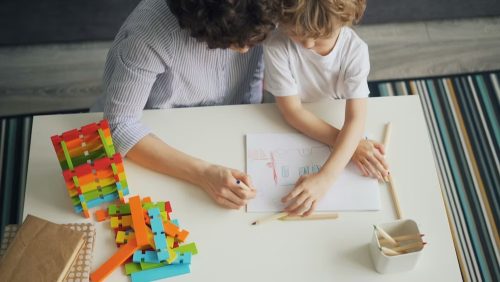
In true free play, adults follow the child’s lead. They can be present, ask curious questions, and ensure safety — but they don’t direct, correct, or take over. When kids are negotiating roles, solving a conflict, or reinventing the rules of a game, that friction is the learning. Stepping in too quickly short-circuits the process.
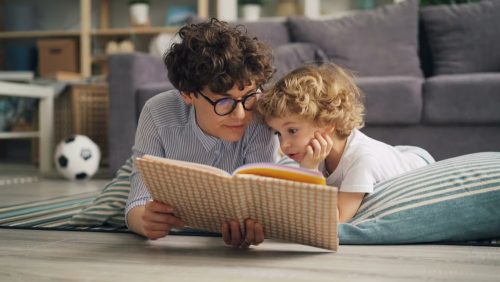
The many flavors of play
Think of play as a varied diet. The goal is exposure to all the food groups, not perfection in any one:
| Physical Building, climbing, running |
Imaginative Dress-up, role play, pretend worlds |
| Intellectual Puzzles, strategy games, math |
Creative Drawing, music, storytelling |
| Social Group games, teamwork |
Storytelling Reading, predicting, inventing stories |
Play builds brains — literally
The prefrontal cortex — the part of the brain responsible for decision-making, impulse control, and planning — grows through the exact kind of problem-solving and negotiation that happens in unstructured play. When a group of kids spends 20 minutes arguing about the rules of a made-up game, they are doing serious developmental work. Their brains are forming new pathways that no worksheet can build.
Your brain craves this too. Research from Jon Kabat-Zinn, founder of Mindfulness Based Stress Reduction, shows that engaging in non-goal-directed activities — and seeing the world through a child’s eyes — significantly reduces adult stress. Play isn’t a gift you give your kids. It’s a gift you give yourself at the same time.
“In the moments when we are able to catch ourselves and change course… a transformation and a healing takes place within ourselves. It becomes a healing moment.”
— Jon Kabat-Zinn, Everyday Blessings: The Inner Work of Mindful Parenting
TRY THIS TODAY
Take a mindful walk with your child and try to see the world through your five-year-old self — the sounds, the smells, the textures underfoot. It takes about ten minutes to feel your blood pressure drop. Your child notices. And so will you.
How play grows emotional intelligence
Of all the gifts free play offers, the emotional ones may be the most lasting. Here’s what children are actually practicing when they play:
Empathy
When kids try on different personas — the villain, the baby, the teacher — they’re building the neural circuitry for perspective-taking. The child who plays a dragon today is more likely to understand someone else’s point of view tomorrow.
Autonomy
Whether a child follows Lego instructions to the letter or goes completely rogue and builds something new, they’re practicing independent thinking with low stakes and no judgment. This is how the decision-making brain develops — one creative mistake at a time.
Processing hard feelings
Children work through confusing or upsetting experiences through play — often without even knowing it. A child struggling with school rules might play out a queen locked in a dungeon, “figuring out” how to appease the wizard captor. This is emotional processing in the language children speak best.
Values and fairness
Board games are a secret superpower. Try playing the Game of Life together and notice what comes up: money, fairness, family choices, and what it means to win or lose gracefully. The dinner table after a board game loss is a gentler place to learn resilience than the sideline after a big sports defeat.
Play is not something to outsource
In clinical settings, play is the language used to help children develop new skills, shift perspectives, and work through difficult experiences. Therapists get to discuss toy dragons and build sand castles for a living — and it works precisely because play is so powerful.
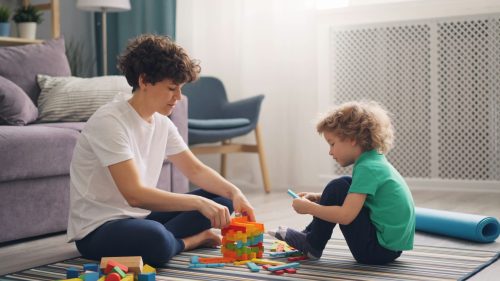
But parenting cannot be outsourced, and neither should play. You don’t need to block off hours or create an elaborate activity. You need a little unstructured time, a willingness to follow your child’s lead, and permission to be a little silly yourself.
A recent study across multiple countries found that 89% of parents enjoy playtime with their children, and 91% said it improved their own wellbeing. The desire is there. What gets in the way is everything else — the calendar, the to-do list, the phone in your pocket.
You will not regret making play a vital part of your home.
In fact, you may find that it’s exactly what you needed too.